View Mode
CORROSION RESISTANT

Stainless Steel & Duplex Alloys

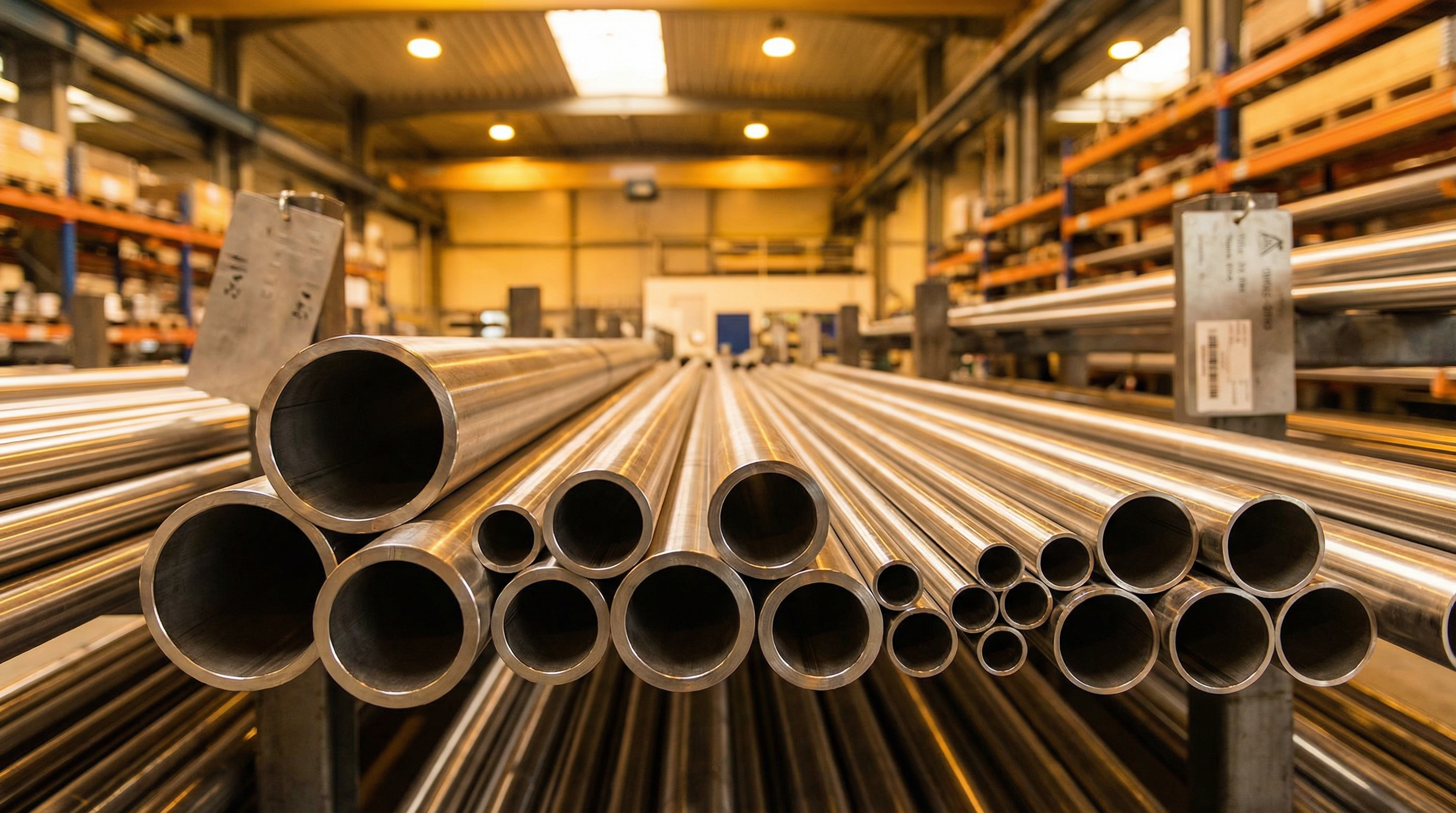
EAGS stocks 304, 316, 317, duplex (UNS S31803), and super-duplex (UNS S32750) in tube, bar, and plate form. Sourced from certified mills with full traceability. We perform mechanical testing, corrosion resistance verification, and supply mill certs with every order.

Quick Facts
6+
Grade Families
NACE
MR-0175 Compliant
3.1
Mill Certs Standard

Stainless & Duplex Grades In Stock

Available in various tempers and surface finishes

304 & 304L

Standard austenitic stainless. Excellent corrosion resistance and weldability. Common in oil and gas, food, and marine applications.

18% Cr, 8% Ni
Low carbon variant available
Good formability

316 & 316L

Molybdenum-enhanced austenitic. Superior pitting resistance in chloride environments. Preferred for subsea and high-chloride service.

16% Cr, 10% Ni, 2% Mo
Enhanced PREN
Marine grade

317 & 317L

Higher molybdenum than 316. Enhanced PREN for severe chloride and acidic exposure. Subsea and deepwater applications.

18% Cr, 11% Ni, 3% Mo
Higher PREN than 316
Chemical processing

UNS S31803 (Duplex)

Cost-effective duplex with balanced ferrite and austenite. Higher yield strength than 316. Good corrosion resistance and weldability.

22% Cr, 5% Ni, 3% Mo
2x yield strength
PREN ~35

UNS S32750 (Super-Duplex)

High PREN (over 40) for maximum corrosion resistance. Excellent strength and fatigue properties. Deepwater and harsh environments.

25% Cr, 7% Ni, 4% Mo
PREN >40
Extreme service

Forms & Finishes

Tube (seamless and welded), bar (round and shaped), plate (flat and coiled). Bright annealed, pickled, or mill scale finishes available.

Seamless & Welded
Multiple finishes
Custom sizes

Common Buyer Questions

Technical guidance for procurement and engineering teams

What's the difference between 304 and 316?
304 is the standard austenitic stainless. 316 adds molybdenum (2-3%), which significantly improves resistance to pitting and crevice corrosion in chloride environments. For seawater or high-chloride service, always use 316 or better.
Why choose duplex over austenitic stainless?
Duplex (S31803) offers 2x the yield strength of 304/316 with comparable corrosion resistance and lower cost. Super-duplex (S32750) adds PREN greater than 40 for severe service. Wall thickness can be reduced, saving weight and material cost.
Do you test for corrosion resistance?
Yes. We perform ASTM G48 and G130 salt spray testing (ASTM B117) on sample material from each lot. Results verify PREN performance and compare to specification. Reports available upon request.
Can you supply seamless tubing in stainless?
Yes. Seamless stainless tube is available in 304, 316, and duplex. We work with certified seamless mills for OD/ID precision and hydrogen embrittlement control. Typical lead time 4-8 weeks.
What's "bright annealed" vs "pickled"?
Bright annealed finish is smooth, shiny, and low-carbon passivated. Pickled finish has a matte appearance and slightly higher carbon. For food/pharma/medical, specify bright annealed. For general industrial, pickled is standard.
Can you accommodate custom sizes and shapes?
Yes. We arrange custom mill runs and in-house turning for non-standard OD, wall, and bar profiles. Minimum quantities apply. Contact us with drawings and requirements.

Ready to specify stainless or duplex?

Let us help you select the right grade for your corrosion environment. We'll source, test, and deliver with full documentation.

Request a Quote
Back to Materials